
The auto insurance claims process may be the last thing on your mind when you hear the crunch of a fender bender. First, you check that everyone is okay. Then the questions begin: Who should you call? What photos do you need? When can your car be repaired? A claim usually starts when you report the accident to your insurer and share information about what happened. From there, an adjuster may review the damage, request an estimate and explain the next steps. Every claim and policy is different, but understanding the process can help you feel more prepared and know what questions to ask.
What triggers an auto insurance claim?
An auto insurance claim may begin after an incident that causes vehicle damage, injuries or another covered loss. Common examples include:
- A collision with another vehicle
- A single-car crash, such as hitting a guardrail
- Damage from hail, flooding, fire or falling debris
- Theft or vandalism
- Hitting an animal
- A broken windshield or other glass damage
Coverage depends on the policy. Collision coverage may apply to crash damage to your vehicle, while comprehensive coverage may apply to theft, hail or vandalism. Liability coverage generally addresses covered injuries or property damage you cause to others.
Filing may not make financial sense in every situation; however, review your policy because you may be required under contract to report all accidents. If the repair estimate is close to or below your deductible, there may be little or no payment for your vehicle damage. Still, reporting may be important when another person or vehicle is involved. Consider state requirements, possible hidden damage and your policy terms.
How the auto insurance claims process works
Imagine you are driving home when another vehicle bumps into yours at a stoplight. No one appears to be hurt, but your bumper is cracked. You may wonder what to do first.
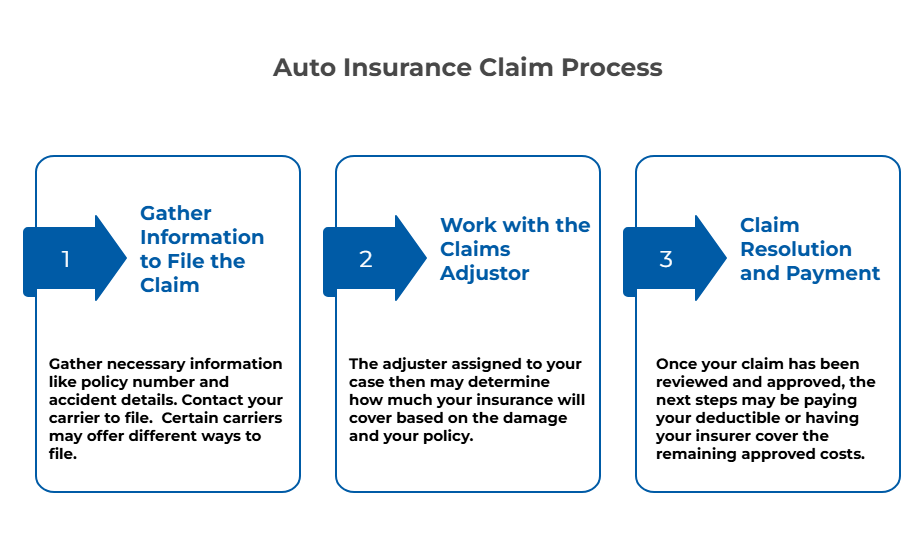
The details may differ, but most auto insurance claim steps follow a similar order.
1. Check for injuries and move to a safer place
First, check yourself, your passengers and others involved for injuries. Call 911 when medical help is needed. If local law permits and the vehicle can be moved, get out of active traffic and stop in a safer location.
Do not argue about who caused the crash. Share the facts with the police and insurers.
2. Document the incident
Take clear photos or videos of the vehicles, visible damage, license plates, road conditions, traffic signs and the wider scene. Exchange names, phone numbers, driver’s license information and insurance details with the other driver. If there are witnesses, ask for their contact information.
3. File a police report
Filing a police report can provide your insurance claims department with necessary information for the investigation and processing of your claim.
4. Report the claim to your insurer
Contact the insurance carrier listed on your policy. Depending on the carrier, you may be able to start filing an auto insurance claim by phone, online or through an app. Reporting promptly gives the insurer a chance to begin its review while details are still fresh.
5. Work with the claims adjuster
The insurer may assign an adjuster to examine your documentation and inspect the damage. Responding promptly to follow-up questions can help keep the review moving.
6. Get an inspection or repair estimate
The carrier may request an in-person or virtual inspection. You may also need an estimate from a repair shop. Ask the carrier about its process before authorizing repairs because procedures can differ.
7. Review the claim decision and next steps
The insurer will evaluate the claim under the policy. If covered, the carrier may authorize repairs or issue payment. If denied, ask for the reason and whether another review is available.
What information do you need to file a claim?
A simple auto insurance claim checklist may help the carrier evaluate the incident and reduce follow-up requests.
Try to gather:
- Your policy number and contact information
- The name of the driver and vehicle information
- The date, time and location of the incident
- A clear description of what happened
- Photos and videos of the scene and damage
- Names, contact details and insurance information for other drivers
- Witness contact information, if available
- The police report number, if a report was made
- Medical, towing or repair records related to the incident
Save copies of what you submit and note your claim number. If something is missing, ask whether you can send it later rather than waiting to report.
How long does an insurance claim take?
If you are asking, “How long does an insurance claim take?” the honest answer is that there is no single timeline. A straightforward claim with clear documentation and limited damage may move through reporting, review and inspection within days. A claim involving injuries, several vehicles, disputed responsibility, severe damage or missing information may take weeks or longer.
The car insurance claim timeline may depend on:
- How quickly the incident is reported
- Whether the carrier receives complete and accurate information
- The availability of drivers, witnesses, adjusters and repair shops
- Whether an inspection or additional estimate is needed
- Whether responsibility for the accident is disputed
- Whether injuries or hidden damage require further review
- Applicable state requirements and carrier procedures
Sending legible documents, responding to requests and asking about the next step may help the claim progress without avoidable pauses. These actions cannot guarantee a completion date.
How are auto insurance claims paid?
An auto insurance claim payout may go to you, a repair shop, a lender or more than one party. Some carriers authorize repairs directly. Others may consider additional documented damage found during repairs.
Suppose a covered repair costs $3,000 and your deductible is $500. The insurance carrier may pay $2,500 in approved costs, while you would generally be responsible for $500. Actual payment depends on the approved estimate and policy terms.
For a total loss, payment may be based on the vehicle’s Actual Cash Value (ACV) under the policy and applicable law, less an applicable deductible. A lender may receive part or all of it. Ask who will be paid and how the amount was calculated.
Common mistakes that delay auto insurance claims
Small missteps can create extra questions. Here are common car insurance claim problems and practical ways to avoid them:
- Waiting to report the incident: Memories fade and evidence may become harder to collect. Report the loss promptly and ask about applicable deadlines.
- Sending incomplete documentation: Missing photos, contact details or forms can pause the review. Use a checklist to confirm what the adjuster still needs.
- Authorizing repairs too soon: The carrier may need to inspect the vehicle first. Ask about the required process before work begins.
- Ignoring messages: An unanswered call or email may stop the next step. Reply promptly or let the adjuster know when you will be available.
- Guessing about the damage: A quick look may not reveal everything. Describe what you observed and allow qualified professionals to evaluate the vehicle.
- Assuming every type of damage is covered: Coverage varies by policy. Review your declarations page and ask questions about deductibles, limits and exclusions.
How long do you have to file a car insurance claim? The deadline can depend on the policy, claim type and state law. Report as soon as reasonably possible. Waiting may make the review harder and could affect the claim.
Get auto insurance claims support when you need it
When an accident happens, contact the carrier shown on your policy to report the claim. Infinity Insurance Agency, Inc. (IIA) is an insurance agency, not the carrier that investigates or decides a claim. But IIA’s Spanish-bilingual agents can help you review your current car insurance coverage, understand common insurance terms and explore policy options for the future.
Maybe your deductible is higher than expected, or you are unsure whether you have rental reimbursement. Those are useful conversations to have before an accident.
Call IIA at 1-855-478-3705 to speak with a Spanish-bilingual agent and request a free personalized quote. Coverage, pricing and availability vary, but one conversation may help you find a policy that better fits your driving needs and budget.
Frequently asked questions about auto insurance claims
How long do I have to file a car insurance claim?
Deadlines vary by policy, claim type and state law. Report the incident as soon as reasonably possible and review your policy. Ask a qualified attorney about legal deadlines.
What if you do not have all the information ready?
You may be able to start the claim and submit details later. Explain what is missing and ask for a list of remaining items.
How long does an insurance claim take on average?
A simple claim may take days, while a more complicated claim may take weeks or longer. Damage severity, inspections, responsibility disputes, injuries and incomplete documentation can all affect claim processing time.
Who may pay for a rental car after an accident?
Rental costs may be covered when your policy includes rental reimbursement, subject to its limits. Another driver’s carrier may consider costs in some situations. Ask the adjuster before renting.
What happens if a claim is denied?
Ask the insurer for the reason and review the decision against your policy. You may be able to provide additional documentation or request another review. Available car insurance options depend on the facts, policy and state requirements.
Know your insurance options
The auto insurance claims process may feel unfamiliar, but it becomes easier to follow when you know the basic sequence: report, document, review, inspect and resolve. Your coverage shapes what may be paid, so reviewing your policy before a loss can be valuable. Want help understanding your options or shopping for a different auto policy? Call IIA. at 1-855-478-3705. A Spanish-bilingual IIA agent can answer questions and provide a free personalized quote.
Get A Personal Auto Insurance Quote